

prebiotic, no added sugar apple and blackberry crumble ice cream (df & Gf)
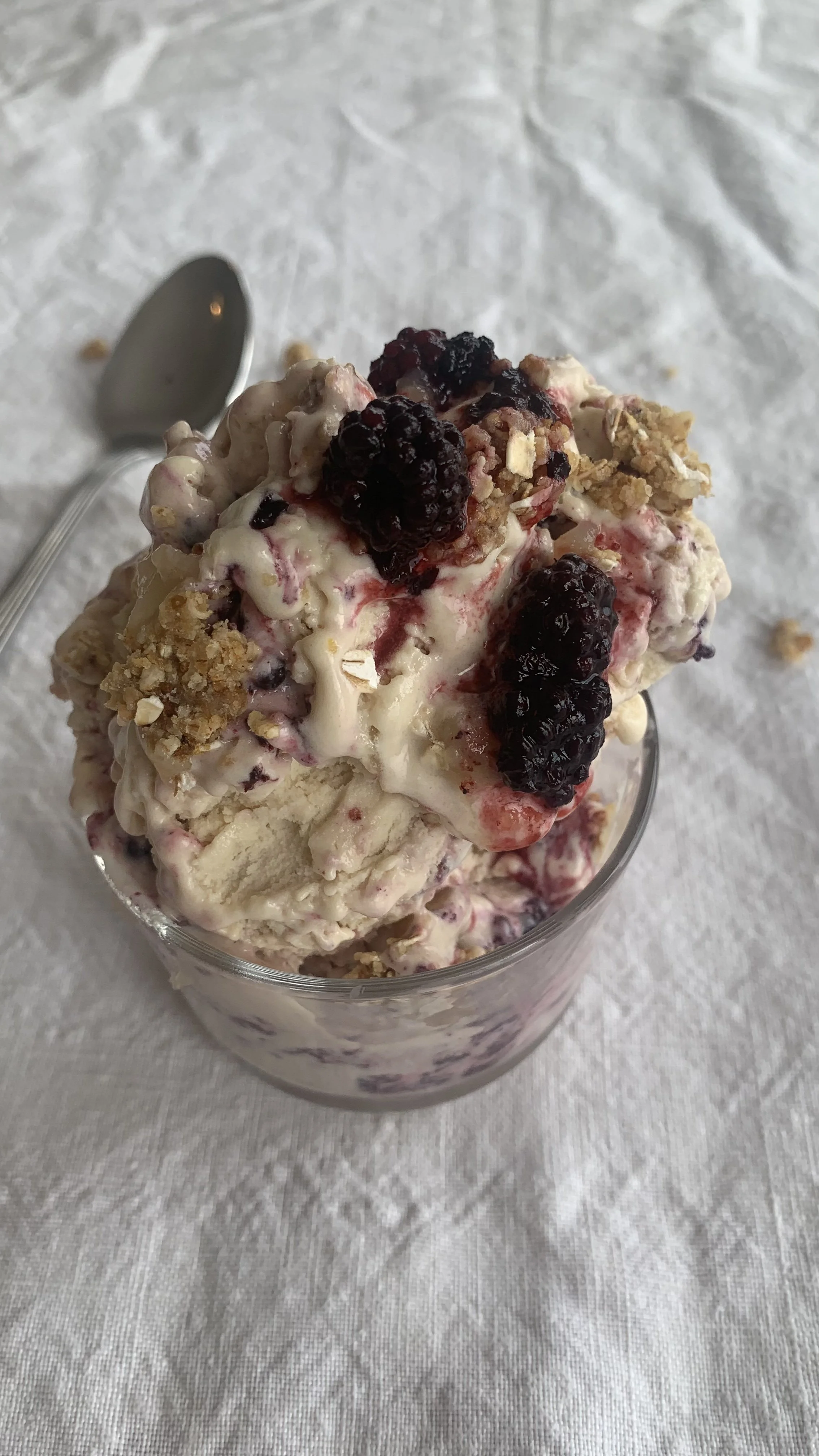
Trying to get a good picture of this ice cream was a nightmare!
Last autumn and winter I had so many recipes ideas that I couldn’t get through them all before the seasons changed, and so this ice cream has been sat on a recipe shelf in my mind since last November, and I can finally share it!
This ice cream truly brings together all of the flavours and textures of an apple and blackberry crumble with a custard and apple flavoured ice cream, toasted crumble pieces and soft, juicy blackberries. But the flavour is not only USP of this ice cream, just one serving (a quarter of the batch) provides you with:
Three different fruits
Around a serving of nuts
8g protein
4g fibre
The healthy fats, fibre and protein make this ice cream super filling and satisfying too - making it a great indulgent snack option.
Better for blood sugar to stabilise hormones, reduce PMS and lower oxidative stress.
Blood sugar spiking foods such as high sugar foods and processed foods can potentially contribute to morePMS, menstrual pain and endo pain. Blood sugar spikes increase oxidative stress, which leadsto more inflammation in the body and that may trigger further pain and symptoms. In fact, oxidative stress is higher in people with endo, and it’s a key driver of endo growth.
Whilst I love ice cream, I don’t love the sugar content so for this recipe, I have focused on the presence of healthy fats (from the nut butter and ground almonds), fibre (nut butter, oats, almonds, apple puree, blackberries and dates) and protein (nuts, soy milk and oats ), which have all been shown to help stabilise ground blood sugar levels and slow down the uptake of glucose/starch from our food (dates and apple, in this case) to our blood stream, preventing blood sugar spikes. In fact, just one quarter of the batch gives you almost 8g of protein and 4g of fibre.
One of the easiest ways for us to support our blood sugar is to opt for whole food carbohydrates, such as dates, instead of sugar or maple syrup, as I have done here. Whole foods still contain their fibre, which helps slow down digestion and the resulting absorption of glucose to the blood stream, creating a steady drip rather than a flood.
Another great way to support blood sugar is with lower glycemic index foods, and every ingredient in this recipe, is low to moderate on the glycemic index scale. The glycemic index is a tool that looks at foods and the impact they can have on your blood sugar, on a scale of 0-100. A high GI index would be 70 and above, a medium GI is 56-69 and a low GI index is 55 or less. High GI foods are very likely to spike your blood sugar levels and do so quickly, foods with a medium GI rating tend to cause a moderate rise and low GI foods tend to keep blood sugar levels stable and steady over time with a gentle rise. This is because low GI foods break down slowly in the gut because they are rich in fibre and slow release carbohydrates, this means that the release of glucose to the blood stream is slow and gradual.
I’ve also intentionally used oats, almonds, apples and cashew butter in this recipe to further support blood sugar.
Rolled oats contain beta-glucan, a special type of fibre found in oats that offers a wide range of health benefits, including stabilising blood sugar post-meals, and as a result, makes oat-based foods more effective than wheat based foods (like using regular flour) for blood sugar stability.
Nuts have been shown to have a positive effect on blood sugar, and whilst less attention has been focused on cashews in the research, they are rich in healthy fats, fibre and protein, which have all been shown to help stabilise blood sugar levels and slow down the uptake of glucose from our food (dates and chocolate, in this case) to our blood stream, preventing blood sugar spikes.
In fact, one study found that consuming mixed nuts, including cashews, improved post-prandial glucose and insulin levels (this means how high glucose and insulin rose after a meal) and a meta-analysis found that 3 weeks of mixed nuts, again, including cashews, reduced fasting glucose levels and HbA1c levels (average glucose levels). Finally, cashews have also been shown to improve insulin sensitivity, which can help those of us struggling with insulin resistance.
To top it off, cashews help to provide a hefty dose of the magnesium in this recipe, and magnesium plays a significant role in blood sugar stability and low levels are associated with insulin resistance and diabetes. It’s so vital, that research has demonstrated that simply an increase in dietary intake of magnesium can actually improve insulin resistance .
Lastly, apples contain a type of fibre, called pectin, which can help slow down digestion and the rate of glucose absorption. In fact, one study found that eating an apple before eating white rice, reduced the post-prandial (after meal) glucose spike. Whilst we’re not eating a whole apple, and the apple is pureed, the fibre is still left remaining (unlike juice), resulting in a low glycemic index and load.
So why does this matter?
Constant blood sugar swings can take their toll on hormones, leading to issues like elevated androgens (think testosterone), which can affect ovulation and cycle length. Blood sugar swings may also cause oestrogen excess or dominance and low progesterone if ovulation is interrupted or stopped entirely. Both of these imbalances can cause more PMS, heavier periods, and may also exacerbate endometriosis symptoms.
Additionally, blood sugar balancing treats like this cake can help us out with luteal phase or period cravings. When we’re in our luteal phase, we often experience more blood sugar swings because oestrogen, which dominates in our follicular phase, helps us to regulate our blood sugar response, but is lower in the luteal phase. As a result, we tend to get cravings for sweet foods or foods high in starch. The problem is, these foods keep us on a blood sugar rollercoaster, and raise inflammation levels, resulting in more of those inflammatory symptoms and pain that we’re trying to avoid. This ice cream, being lower in sugar and rich in fibre, can help us get our fix without the pain and PMS triggering spikes.
Finally, blood sugar swings are linked heavily with mood disorders such as depression and anxiety, so if you struggle with low moods in your luteal phase, supporting blood sugar can actually support your mental health.
Now, let’s be clear before we wrap up this section. I am not saying you have to avoid sugar or refined carbs for the rest of your life, but if like me, you enjoy a sweet treat as a snack or after dinner, it can help to make these regular goodies a bit more blood sugar balancing, so that we’re looking after ourselves on a day to day basis.
Rich in prebiotics and polyphenols to help heal the endo belly and reduce systemic inflammation.
The latest data shows that 96% of UK adults are getting less than the recommended 30g fibre a day. That’s not great for our guts, which rely on fibre to thrive, and people with endo need extra gut support already (as you’ll come to learn shortly) so a lack of fibre isn’t going to help the situation (though you may find you need to tailor your fibre sources if you have IBS or SIBO).
A quarter of this batch provides 4g of fibre, and it also contains pectin from apples, a type of prebiotic fibre which feeds our good gut bacteria.
Additionally, a major study of 10,000 people found that eating 30 or more plant foods a week helps to create a healthier and more diverse microbiome. This recipe offers you around 5 of your 30 already, and with herbs, spices, olive oil, fruits, veggies, beans/legumes, teas and coffee and whole grains all counting, you can easily top up your levels further. For extra guidance on how to reach your 30 a week, check out this article by The Gut Health Doctor or this one by Zoe.
And thanks to our specific ingredients of apples and dates, this recipe is also a good source of polyphenols.
Polyphenols are types of antioxidants found in certain plant foods that not only reduce inflammation levels and improve overall health, but they are also an absolute favourite food (prebiotic) for our gut microbiome, which means they can support our good gut bugs to thrive.
But why does this matter for us endo folk?
Research is finding a strong correlation between microbiome disturbances and endometriosis development, such as reduced levels and variety of good gut bugs and higher levels of pathogenic (bad, infectious), opportunistic (in high numbers, can cause problems like inflammation) gut bugs, as well as gut bugs linked to elevated oestrogen levels. These microbiome differences have also been associated with higher IL-8 levels, a type of inflammatory cytokine shown to be involved in the development of endometriosis.
Polyphenols and prebiotic fibre are like gut bug boosters - the more we provide to our good gut bugs, the more they grow and outnumber the bad guys. This helps to bring the gut back into harmony, which can improve gut symptoms and intestinal inflammation and whilst we need to do more research, could even help us fight endo.
These prebiotic fibres help us to increase our production of gut friendly fats, called short chain fatty acids, which are made when good bacteria consume fibre. Research shows that people with endo may be low in short chain fatty acids and that this may be linked to endo pathogenesis, so by improving our fibre levels, we may actually be improving some of our defences against endo.
A good source of hormone and endo beneficial nutrients, including magnesium, B6, iron and zinc.
Magnesium
Research has shown magnesium to be an effective treatment in preventing dysmenorrhea (period pain) because it reduces inflammatory prostaglandins that are the drivers of both endo and period pain. One study showed that six months of magnesium treatment reduced prostaglandin F2a by over half! In fact, in recent research, magnesium is being explored as a dietary treatment for endo and a higher intake of magnesium rich foods was associated with a lower risk of endo. Additionally, magnesium helps to regulate our sex hormones, and as result, is a recognised treatment for preventing PMS.
B6
B6 is one of the most important B vitamins for balanced hormones as it supports progesterone production and oestrogen metabolism. Additionally, research has shown that B6 treatment can help reduce PMS, especially the mood challenges that can come with the syndrome.
Iron
Iron deficiency is extremely common in general, but even more so in people with heavy menstrual bleeding and/or endo, with a recent major study of over 43,000 endo patients finding that we have a six-fold higher odds of iron deficiency.
Iron plays a key role in preventing fatigue, and yet many of the clients who I work with, come to me with significantly low levels. Supporting healthy iron absorption and intake is a core part of beating endo fatigue and recovering from heavy blood loss and low levels can cause brain fog, extreme tiredness, heart palpitations, dizziness, muscle weakness and depression to name a few.
Healthy iron levels are also essential for ovarian function, which is paramount to producing healthy amounts of sex hormones and low levels are associated with menstrual irregularities and fertility problems. Additionally, low iron levels are linked to ADHD development and can worsen ADHD symptoms, and ADHD is a condition which many people with endo struggle with.
Whilst heme iron (found in animal products and spirulina) is the easiest form of iron to absorb, we can also top up our iron levels with non-heme iron rich foods, found in plants. Cashews, dates, oats and almonds are all good sources of non-heme iron, but the cashew does the heavy lifting here, making this ice cream a surprisingly good source of iron. Pair with the vitamin C in the blackberries aids absorption, as non-heme iron can be difficult for our body to absorb, but vit C has been shown to aid this process.
Zinc
Low levels of zinc have been linked to endo, and research has shown it can significantly reduce period pain thanks to its anti-inflammatory benefits. It additionally supports follicle development and ovulation, while deficiency has been linked to infertility.
IMPORTANT NOTES TO HELP YOU TAILOR THIS RECIPE TO YOUR OWN BODY AND NEEDS (AND TASTEBUDS!)
Everything you’ve said about blood sugar and processed foods, does that mean I can never have my favourite treats again?
Absolutely not. I am all for ‘worth it moments’. Enjoy our fav foods, whatever they are, in moments when we really desire them. But I am a health coach, and my goal is to minimise your symptoms and lower things like oxidative stress and inflammation that could contribute them, so I am going to encourage snacking smarter and leaning on healthier treats on a day to day basis, and that’s way these recipes are for. So you can have your cake, and eat it!
Are oats gluten free?
Oats are naturally gluten free, but are often processed in a factory that handles gluten, so if you’re coeliac, then go for gluten-free oats which have been processed in a factory without gluten.
Is this low FODMAP?
Normally I make as many of my recipes low FODMAP, but this one isn’t due to the apple puree and cashew butter.
Is this recipe suitable for SIBO?
Everyone’s triggers vary with SIBO, but this recipe may not be, as it is high FODMAP, but see what works best for you.
Further resources
If you’re struggling with your endo symptoms or gut health, you might find my courses and one to one coaching helpful. You can find out more here. I’ve also got endless podcast episodes on endometriosis and SIBO.
prebiotic, no added sugar apple and blackberry crumble ice cream (df & Gf)
Ingredients:
Ice cream base
250 soy milk - I used a good quality soy for the additional protein, but you can use a nut milk or coconut milk if preferred (I tend to avoid oat and rice milks due to the starch levels).
200g apple puree
80g cashew butter
1 tsp vanilla extract
Crumble topping
25g oats
15g ground almonds
1/2 tsp olive oil
1 tsp vanilla extract
1.5 dates (medjool is best, but any soft and juicy ones will work)
Pulse to combine and then toast in a pan, stirring to form clumps, and wait for it to smell and taste toasted
Mix ins
25g apple puree - optional but recommended for bursts of apple flavour and to give that cooked fruit vibe.
50g blackberries - can be fresh or frozen, but if frozen defrost for 20 mins before using to prevent them from being too hard to eat.
Makes: 2-4 servings
Prep time: 20 mins
Churn/chill time: 45 mins or overnight
Method
In a food processor, blend the apple puree, cashew butter, vanilla extract and soy milk until smooth.
If you have an ice cream machine, pour the mix into your ice cream machine and follow the instructions. If you don’t have an ice cream machine, pour the mix into ice cube moulds (you’ll need at least two trays) and freeze overnight.
In the meantime, pulse the oats, ground almonds, olive oil, vanilla extract and dates until a crumb forms. Add to a fry panning and toast on a medium heat, stirring frequently to form clumps of crumble topping. When fragrant, remove from the heat (you can taste it to see if it’s toasted enough for you). Leave to cool as if used when hot, it’ll melt your ice cream too quickly!
If using a machine, add the blackberries, remaining apple puree and crumble topping according to the instructions (some machines tell you to add in the last 5 minutes, others recommend stirring through once the ice cream is ready). You can then serve if ready to eat, or decant into a container, cover and freeze for another 30 minutes to firm up.
If using ice cubes, remove from the freezer and allow to soften for at least 10 minutes. Pop the cubes into a food processor (or blender) and pulse until the mix turns to crumbs ‘crumbs’ and start blending until creamy. This can take some time, but if they really don’t seem to be breaking down, leave to soften for another 5-10 minutes.
When creamy, stir through the blackberries, apple puree and crumble. Either serve as is (it’ll be like a soft serve), but if you want a firmer ice cream, spoon into a container and cover, freeze for 30 minutes.
Endo of summer special offer - if you’ve got half way through the year and endo has taken much of that time from you, I’m offering £500 off my 12 session 1:1 coaching or £250 off the six session coaching. Learn more about coaching here.
Looking for tools to help you manage endo and your hormones?
These are some of my favourite brands…
DITTO - DITTO is a clinically studied PMS and PMDD supplement with 10 ingredients that target both the mental and physical challenges that come along with the menstrual cycle, developed by a PhD Nutrition Scientist. You can use the code: ENDOBELLY (all caps) for 20% off any and all orders, now and in the future.
Mira - Mira is an at-home hormone testing device for every day use. Use this link and code 2DJESS20 to get 20% off the device and any future wand orders.
Tempdrop- Track fertility effortlessly with Tempdrop’s Wearable Sensor. Get 15% off with code: ENDOLIFE
Need more help or want to learn how to work with me?
Ways to work with me:
One to one coaching info and application
Live and Thrive with Endo 2.0 DIY online course
Endo Sessions: Single and mini-package one to one endo coaching
SIBO Sessions: Single and mini-package one to one SIBO coaching
Masterclasses in endo nutrition, surgery prep and recovery and pain relief
This EndoLife, It Starts with Breakfast digital cookbook
Free resources:
This podcast!