

Gluten and dairy free, microbiome restorative Apple Crumble DOnuts
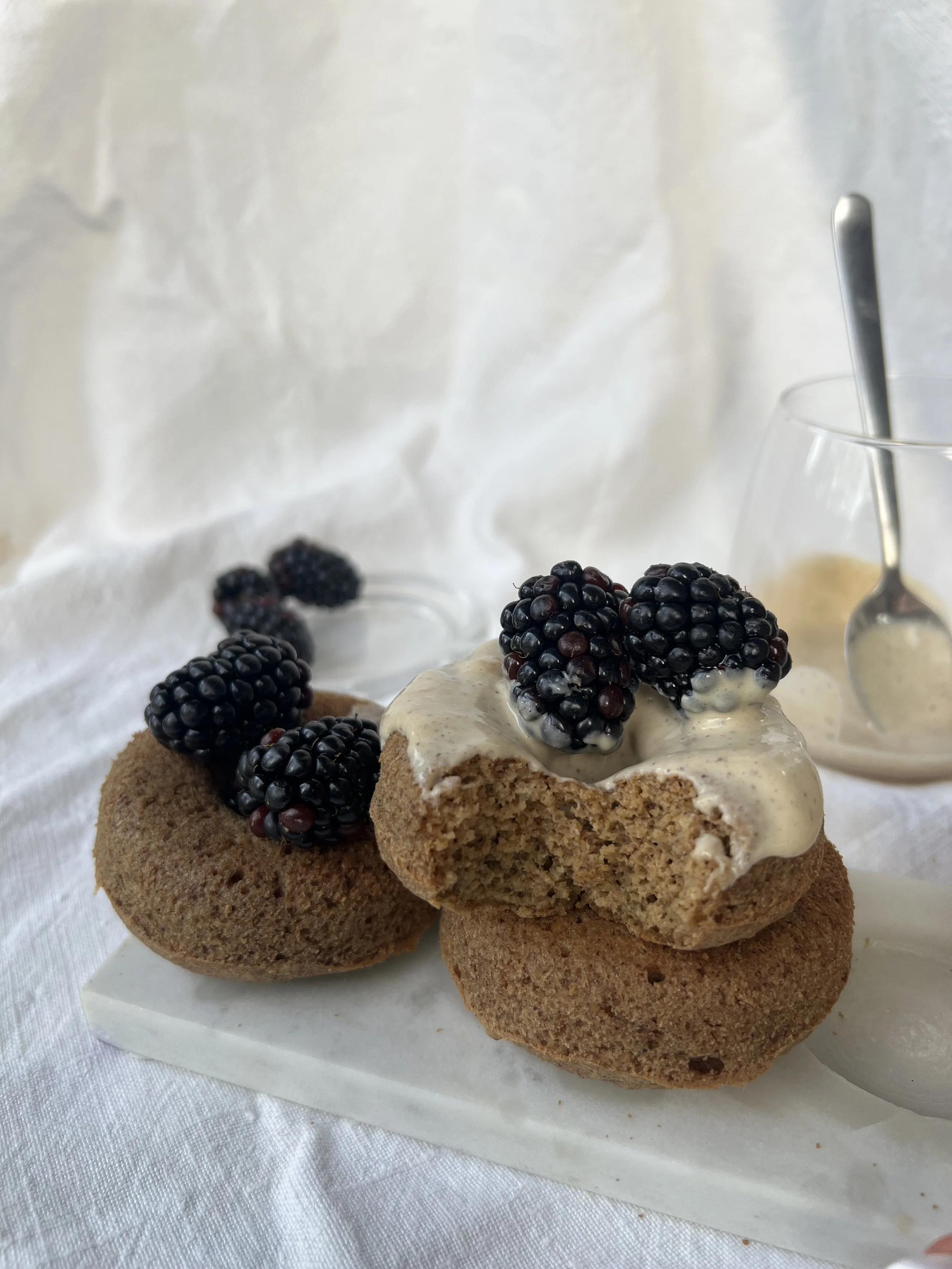
I am just going to admit something straight up. I think these could be better. But, before you close the tab - hear me out. Chris really likes them, and thinks I am just being a perfectionist, which is probably in part true, but I always like to give you guys the best recipes I can. However, I am out of options for testing these again - I can’t find all the ingredients I need where we are staying in Latvia, and even if I could, I am out of time for recipe testing as my days are chock full of clients calls before I go on Christmas leave.
Now, of course, my instinct was to just park them until next year - but when I posted pics on my IG stories during recipe testing, they blew up and I had so many requests for the recipe. So naturally, I really wanted to share these for those of you wanting to try them for the Christmas season!
Now, don’t get me wrong. These are still really good donuts. I just think they could be even better. So, I would love you to give them a go, and judge for yourself!
These apple crumble donuts are…
Gluten free to help minimise symptoms and reactions in certain endo folk.
Whilst not everyone with endometriosis needs to go gluten free or entirely gluten free (some people feel better just not eating it that often), reducing gluten may help some of us manage our pain and endo belly symptoms.
In a major and recent survey study of 2388 endometriosis patients, out of those who removed or reduced gluten, 45% experienced a reduction in pain. In another study, 75% of patients had a significant reduction in painful symptoms after eliminating gluten for 12 months. There is also a significant association between endometriosis and coeliac disease. And whilst the research on endometriosis and gluten has limitations, I myself experienced improvements by reducing gluten in my diet (in fact, it was one of the key players for helping me live a normal life again no longer ruled by pain and my periods), as have many of my clients (though not all, it’s very individual).
If you’d like to learn more about why gluten may impact some of us with endo and how, and what all the research says, I recently did a huge deep dive into all the research on my podcast, here.
Made with whole foods and are rich in healthy fats, fibre and protein to stabilise blood sugar, plus psyllium husk for an extra blood sugar supportive boost!
Unfortunately, simple carbohydrates, like those found in baked goods such as donuts, are some of the biggest blood sugar spikers, which can pose a problem for us endo peeps.
Blood sugar spiking foods such as high sugar foods and processed foods can potentially contribute to more PMS, menstrual pain and endo pain. Blood sugar spikes increase oxidative stress, which leads to more inflammation in the body and that may trigger further pain and symptoms. In fact, oxidative stress is higher in people with endo, and it’s a key driver of endo growth. In fact, a large scale study found that low glycemic foods may be associated with a lower risk of endo.
To avoid these issues, I have focused on the presence of healthy fats (nuts, olive oil, egg), fibre (oats, apple, nuts) and protein (egg, nuts), which have all been shown to help stabilise blood sugar levels and slow down the uptake of glucose/starch from our food (oats and dates in this case) to our blood stream, preventing blood sugar spikes.
One of the easiest ways for us to support our blood sugar is to opt for whole food carbohydrates, such as whole oats instead of flour, and fruit instead of sugar or maple syrup, as I have done here. Whole foods still contain their fibre, which helps slow down digestion and the resulting absorption of glucose to the blood stream, creating a steady drip rather than a flood. The added benefit is that rolled oats contain beta-glucan, a special type of fibre that offers a wide range of health benefits, including stabilising blood sugar post-meals (and as a result, makes oat-based foods more effective than wheat based foods for blood sugar stability).
Another great way to support blood sugar is with lower glycemic index foods, and every ingredient in this recipe is low to moderate on the glycemic index scale, with the exception of a very small amount of apple juice for added flavour (you can swap for all milk, but the apple flavour is greatly reduced). The glycemic index is a tool that looks at foods and the impact they can have on your blood sugar, on a scale of 0-100. A high GI index would be 70 and above, a medium GI is 56-69 and a low GI index is 55 or less. High GI foods are very likely to spike your blood sugar levels and do so quickly, foods with a medium GI rating tend to cause a moderate rise and low GI foods tend to keep blood sugar levels stable and steady over time with a gentle rise. This is because low GI foods break down slowly in the gut because they are rich in fibre and slow release carbohydrates, this means that the release of glucose to the blood stream is slow and gradual.
Overall, these donuts are estimated to have a low-medium glycemic index and a moderate glycemic load per serve.
To further slow down that moderate rise in blood sugar, we have four super star ingredients; psyllium husk, sunflower seeds or almonds, apples and olive oil.
Multiple studies have shown that taking psyllium husk daily, normally before a meal, can improve blood sugar levels over time. And adding psyllium husk to meals or immediately before meals has also been shown to improve the postprandial (after meal) glucose response, blunting spikes, and one study found these effects were even better when combined with a meal high in protein.
How does this magic ingredient work? Thanks to its high viscous and soluble fibre content. Psyllium creates a gel-like texture by absorbing water (either added water or liquid in our gut) and slows down digestion and transit time, reducing the uptake and slowing down the absorption of glucose.
Research has also shown that adding olive oil to meals reduces the post-prandial blood sugar levels (meaning it helps prevent blood sugar spikes from foods/meals), even in high glycemic meals (meals/foods high in sugar or starch that can cause rapid blood sugar spikes).
Sunflower seeds have been shown to also have benefits for blood sugar. Adding sunflower seeds and other seeds may help lower the glycemic index of carb rich foods, like baked goods. Additionally, sunflower seeds contain compounds that have been shown to improve fasting glucose levels and show improvements in animal models as well. And if you opt for ground almonds instead, the good news is, almonds also help to reduce the postprandial (post meal) blood sugar spike in multiple studies!
Finally, the naturally occurring soluble fibre found in apples, called pectin, forms a gel in the gut, which slows down digestion and has been shown to improve post-prandial (post-meal) glucose spikes, as well as insulin sensitivity and blood sugar management generally. Whilst most studies are performed on high doses of pectin, the natural amounts of pectin in apples, combined with these other beneficial ingredients, can help to reduce the blood sugar impact of these donuts overall.
Constant blood sugar swings can take their toll on hormones, leading to issues like elevated androgens (think testosterone), which can affect ovulation and cycle length. Blood sugar swings may also cause oestrogen excess or dominance and low progesterone if ovulation is interrupted or stopped entirely. Both of these imbalances can cause more PMS, heavier periods, and may also exacerbate endometriosis symptoms.
Additionally, these donuts can help us out with luteal phase cravings. When we’re in our luteal phase, we often experience more blood sugar swings because oestrogen, which dominates in our follicular phase, helps us to regulate our blood sugar response, but is lower in the luteal phase. As a result, we tend to get cravings for sweet foods or foods high in starch, such as cookies! The problem is, these foods keep us on a blood sugar rollercoaster, and raise inflammation levels, resulting in more of those inflammatory symptoms and pain that we’re trying to avoid. These donuts, being low in sugar and rich in fibre, can help us get our fix without the pain triggering spikes.
Finally, blood sugar swings are linked heavily with mood disorders such as depression and anxiety, so if you struggle with low moods in your luteal phase, supporting blood sugar can actually support your mental health.
Rich in prebiotics, probiotics and polyphenols from the oats, cinnamon, olive oil and apples to help heal the endo belly and reduce systemic inflammation.
A major study of 10,000 people found that eating 30 or more plant foods a week helps to create a healthier and more diverse microbiome. This recipe offers you 4-5 of your 30! For extra guidance on how to reach your 30 a week, check out this article by The Gut Health Doctor or this one by Zoe.
This recipe is also super high in polyphenols. Polyphenols are types of antioxidants found in certain plant foods that not only reduce inflammation levels and improve overall health, but they are also an absolute favourite food for our gut microbiome, which means they can support our good gut bugs to thrive.
Polyphenols can be found in various plant foods, and are in high amounts in olive oil, cinnamon and even apple juice. The anti-inflammatory effects of extra virgin olive oil, thanks to its polyphenol content, are far reaching. For example, research has shown that extra virgin olive oil can decrease C-Reactive Protein levels, a marker for inflammation.
Additionally, these are a great source of prebiotic fibre from the whole foods, and provide special soluble fibres like beta-glucans from the oats, that are incredibly beneficial for a healthy gut microbiome.
Apples are also a rich source of both insoluble and soluble fibre, including pectin, which can benefit both constipation and diarrhoea by bulking out stools and absorbing water, with multiple studies demonstrating that pectin can help normalise bowel movements. Pectin has also been shown to raise good gut bugs like bifidobacterium and lactobacillus, and can even help inhibit the growth of harmful bacteria. It may also help to strengthen and repair the intestinal lining, preventing LPS leakage (more on that and why it matters below!).
Research is finding a strong correlation between microbiome disturbances and endometriosis development, such as reduced levels and variety of good gut bugs and higher levels of pathogenic (bad, infectious), opportunistic (in high numbers, can cause problems like inflammation) gut bugs, as well as gut bugs linked to elevated oestrogen levels. These microbiome differences have also been associated with higher IL-8 levels, a type of inflammatory cytokine shown to be involved in the development of endometriosis.
Polyphenols and fibre are like gut bug boosters - the more we provide to our good gut bugs, the more they grow and outnumber the bad guys. This helps to bring the gut back into harmony, which can improve gut symptoms and intestinal inflammation and whilst we need to do more research, could even help us fight endo.
But that’s not where the benefits of prebiotics end. Pectin, beta-glucans and psyllium husk both help to boost short chain fatty acid levels, including acetate and propionate and even butyrate.
Research shows that people with endo may be low in short chain fatty acids. Acetate and propionate play an incredible role in reducing systemic inflammation, immune regulation and helping to stabilise blood sugar, but butyrate is the highlight here. Butyrate has a range of benefits for endometriosis and gut health such as reducing intestinal inflammation, improving insulin sensitivity, preventing leaky gut, promoting the growth of beneficial bacteria and inhibiting the growth of harmful bacteria. But here’s what I find most interesting. Butyrate inhibits our inflammatory immune response to lipopolysaccharides (LPS) - LPS are toxins that come from certain bacteria, and have been shown to be heavily involved in endo pathogenesis.
Now you might think that without its prebiotic benefits, that psyllium may worsen endo belly by causing gas and bloating. However, psyllium ferments at a slower pace than some other types of fermentable carbohydrates, which means that it’s less likely to trigger a quick and excessive increase in gas, which results in bloating and other IBS symptoms like cramps, or diarrhoea, etc.
Having said that, it is worth noting that everyone has their own unique triggers, especially if small intestine bacterial overgrowth is present, so just because it’s generally deemed as better tolerated, doesn’t mean it will be, and Monash University, the creators of the Low FODMAP diet, acknowledge that psyllium husk may be one of those fibres which can exacerbate symptoms for some people, despite it being recommended for people with IBS.
Despite the word of warning, psyllium also has other benefits for us endo belly gals and folks. Psyllium is classified as a bulking type of fibre, this means that it increases volume and mass of stools, which in turn, improves consistency and form, and the extra bulk can increase the frequency of bowel movements and speed up colonic transit time, which is the time it takes for food to pass through the gastrointestinal tract. This makes psyllium husk a great evidenced based option for people with constipation, and in fact, it has been studied for this purpose multiple times, hence why you will find it in prescription and over the counter laxatives. Additionally, thanks to its gel-forming properties (by absorbing water), psyllium can help reduce diarrhoea and loose stools.
Finally, the small amount of cream cheese in this recipe (providing you buy one with live cultures) offers a little hit of probiotic benefits. Probiotic foods provide us with more beneficial bacteria, to help top up and diversify our own. Given the strong connection between endo and the microbiome, it’s important for us to introduce new and varied bacteria through various probiotic sources, so that we can build up our healthier bacteria, but also outcompete the pathogenic and opportunistic bacteria (such as e.coli and klebsiella).
Are a great source of beneficial nutrients, including magnesium, zinc and folate.
Research has shown magnesium to be an effective treatment in preventing dysmenorrhea (period pain) because it reduces inflammatory prostaglandins that are the drivers of both endo and period pain. One study showed that six months of magnesium treatment reduced prostaglandin F2a by over half! In fact, in recent research, magnesium is being explored as a dietary treatment for endo and a higher intake of magnesium rich foods was associated with a lower risk of endo.
Additionally, magnesium helps to regulate our sex hormones, and as result, is a recognised treatment for preventing PMS.
Low levels of zinc have been linked to endo, and research has shown it can significantly reduce period pain thanks to its anti-inflammatory benefits. It additionally supports follicle development and ovulation, while deficiency has been linked to infertility.
Folate is crucial to ovarian function and ovulation, and low folate levels can cause irritability, mood swings and fatigue, and fertility problems.
Important notes to help you tailor this recipe to your own body and needs (and tastebuds!)
Important: Apple flavour
As I said, I think this recipe could be better, and one of those improvements in my opinion is the apple flavour. I think it could be stronger, but getting hold of apple puree wasn’t easy, and this gal does not have time to be coring and cooking 1lb apples every time I need to recipe test! I’ve used a small amount of apple juice to strengthen the flavour, but apple juice is a big blood sugar spiker, so I have kept the amount minimal. Of course, you could increase it and decrease the milk for flavour and I’m sure that would work well, but you will be raising the glycemic load of the donuts. Having said that, one donut would not contain much apple juice, so the impact would be fairly minimal.
Important: Keeping these from drying out
Another improvement I want to make is that these donuts, in comparison to my other ones, are more prone to drying out on the outside. This is because the dates I used in my other donut recipes, added some oil that the apple puree doesn’t bring, and so whilst the interior is lovely and soft, the exterior can feel a bit rough. The way to avoid that is to get them covered and in the fridge when just cool, until you frost them. They soften up beautifully in the fridge and once the frosting is on to.
Making these dairy free
Research shows that about half of people with endo may experience improvements in pain and symptoms with the removal of dairy. However, dairy is nuanced so it’s worth reading or listening to this series to help you work out if it’s right for you and how much you can tolerate (you may not need to cut it out entirely!).
If you know you can’t tolerate milk, use a good quality dairy free milk like an almond that just has simple ingredients (almonds, water, salt) and no added gums, starches or preservatives. I used almond milk with one test and goat’s milk with another (as I don’t do well on cow’s milk) and they both came out great.
Making these nut free
Sub the cashew butter for sunflower seed butter, and swap the almonds for sunflower seeds.
Making these egg free
Whilst I haven’t tried it, you could sub the egg for 45ml aquafaba (the water from a chickpea can) and when you blend the wet ingredients, pulse to get it super frothy, as that’s what will crate the lightness and airiness that the egg brings. Be careful to mix gently too, as to not burst the air bubbles. Let me know how they turn out!
Are oats gluten free?
Oats do not contain any gluten, but most factories that handle oats, also handle gluten, which means there are often trace amounts of gluten on the oats. If you have coeliac disease or an allergy, you need to avoid all traces of gluten, so go for gluten free oats. The same may be said if you have a very reactive intolerance. However, if you just generally avoid or minimise gluten, regular oars should be just fine.
Why does the custard glaze contain cream cheese?
I wanted something quick and easy for the custard glaze, so I obviously wasn’t about to start recommending you make a ‘true’ custard. I was actually just going to go with cashew butter and vanilla, but I had some cream cheese left over from another recipe, so I aded that, and for some reason, it really enhanced the custard flavour! You can leave out if you don’t have any to hand or if you’d prefer to just stick with the cashew, but I like it best with the cream cheese.
Are these low FODMAP?
Unfortunately, due to the quantities of apple puree and juice, these are not low FODMAP.
Further resources
If you’re struggling with your endo nutrition or gut health, you might find my courses and one to one coaching helpful. You can find out more here. I’ve also got endless podcast episodes on endometriosis and SIBO.
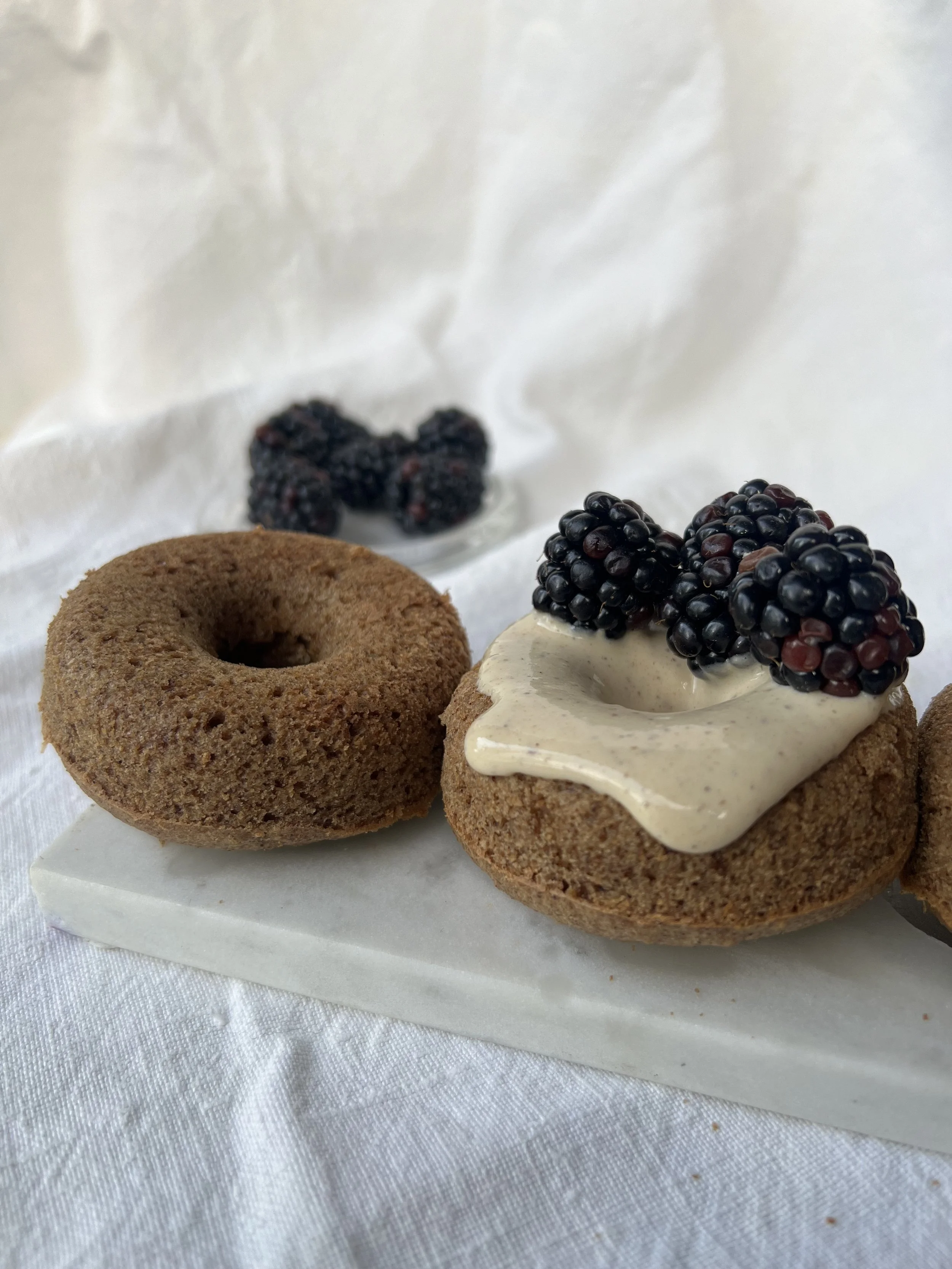
Gluten and dairy free, microbiome restorative Apple Crumble DOnuts
Ingredients:
For the donuts
70 g rolled oats (blended into flour, you can use oat flour if preferred)
25 g ground almonds or sunflower seeds
100 g apple puree (100% apples)
80-100 milk of choice, try to avoid rice/oat for blood sugar (if you go for 20ml apple juice, use 100ml milk but if you’re going with 40ml apple juice, then use 80ml of milk. The liquid just needs to amount to 120ml total.)
20-40ml apple juice (100% pure apple)
1 large egg
30 ml olive oil
5 g psyllium husk powder (if you only have husk, you can grind in a spice grinder)
1/2 to 1 tsp of cinnamon (based on taste)
Baking powder: 1 tsp
Baking soda: ¼ tsp
Pinch of salt
1 tsp vanilla extract (optional)
*You can use more or less depending on your preferences
For the ‘custard’ frosting:
60ml milk of choice (again, try not to go for oat or rice)
1.5 medjool dates (can go for 2 if you’d prefer it sweeter, but I don’t think it’s necessary)
1 tbsp cream cheese (dairy free, if needed)
2 tbsp cashew butter (100% cashew)
2 tsps vanilla extract
For the crumble topping:
Fresh or defrosted blackberries, arranged on the donuts as desired
Crumble topping from this recipe, baked in oven at 170c for 10-12 minutes until golden brown
makes: 6 donuts
prep time: 15 minutes
bake time: 18 mins
cool time: 20 mins
(CRUMBLE topping will require additional time)
Method:
For the donuts
Preheat your oven to 180c (fan assisted). If you have a silicone donut mould, you shouldn’t need to grease, but if you have any other kind of mould, grease lightly with olive oil or coconut oil.
Remove the stones from the dates and soak in hot water for five minutes to soften up (don’t leave too long or you’ll lose the sweetness)
If using whole oats, pulse in a spice grinder or food processor until you get a fine a flour as you can manage.
Add the oats to a bowl with the ground almonds/sunflower seeds, psyllium husk powder, baking powder, spices, salt and baking soda. Whisk with a fork or hand whisk to fully incorporate and to remove any lumps.
In a blender, add the softened dates (water drained off), egg, olive oil and milk and vanilla extract if using, and blend until smooth.
Carefully and slowly pour the wet ingredients into the dry ingredients whilst gently stirring with a hand whisk. You want to keep the batter light and airy, and to not burst too many bubbles, but you also want to break up any lumps of oat flour.
Spoon into six donut moulds and leave to rest for 5 minutes for the psyllium to absorb the moisture.
Pop in the oven on the middle shelf, for 18 minutes, until the tops are springy to touch.
Remove from the oven and leave to set for 5 minutes in the mould, then carefully, run a knife around the edges and the donut hole, and gently lift out to prevent any breaking off inside.
Leave to cool for 10-15 minutes and then transfer to an air tight container and refrigerate quickly as they are prone to drying when left out in the air.
For the frosting
Soften the dates in hot water for five minutes, then drain.
Blend all the ingredients together until thick, glossy and smooth.
Pour or spoon evenly over each donut whilst still slightly warm, and allow to drizzle down the sides.
Dust with cinnamon if desired and decorate with blackberries and crumble, if desired.
For the crumble topping
Follow the recipe instructions here, and bake at 170c (fan) on a lined baking tray for 10-12 minutes until gold brown and starting to crisp.
Looking for tools to help you manage endo and your hormones?
These are some of my favourite brands…
DITTO - DITTO is a clinically studied PMS and PMDD supplement with 10 ingredients that target both the mental and physical challenges that come along with the menstrual cycle, developed by a PhD Nutrition Scientist. You can use the code: ENDOBELLY (all caps) for 20% off any and all orders, now and in the future.
Mira - Mira is an at-home hormone testing device for every day use. Use this link and code 2DJESS20 to get 20% off the device and any future wand orders.
Tempdrop - Track fertility effortlessly with Tempdrop’s Wearable Sensor. Get 15% off with code: ENDOLIFE
Need more help or want to learn how to work with me?
Ways to work with me:
One to one coaching info and application
Live and Thrive with Endo 2.0 DIY online course
Endo Sessions: Single and mini-package one to one endo coaching
SIBO Sessions: Single and mini-package one to one SIBO coaching
Masterclasses in endo nutrition, surgery prep and recovery and pain relief
This EndoLife, It Starts with Breakfast digital cookbook
Free resources:
This podcast!