

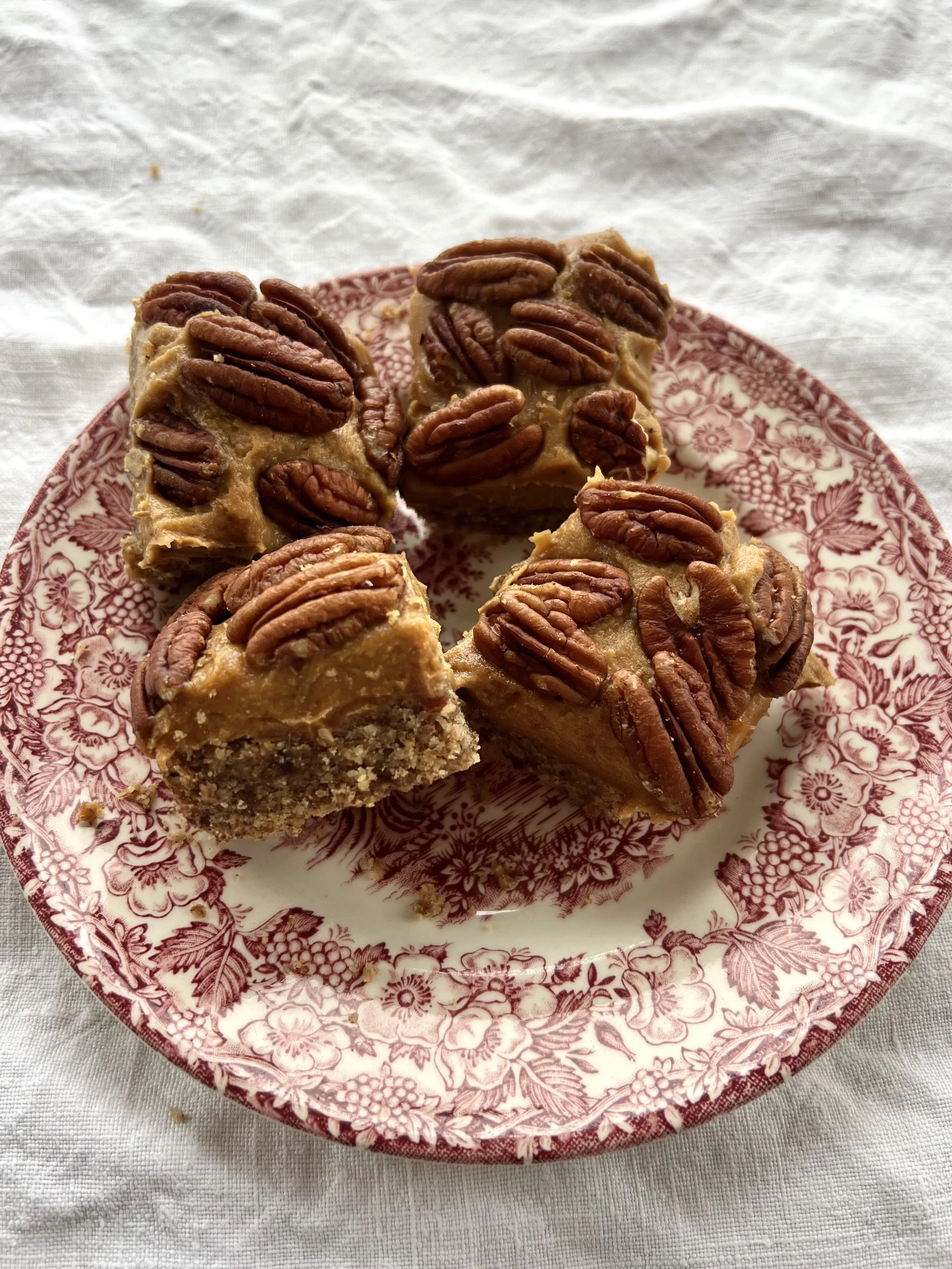
I am obsessed with experimenting with American fall flavours at the moment - the problem is, I have never had a sweet potato pie, pecan pie or pumpkin pie in my life. So, rather than trying to replicate one of the originals and get it wrong, I decided to just do my own thing, inspired by the traditional flavours.
Now, as someone with interstitial cystitis, avoiding spices most of the time helps me to keep my pain low, so I recipe tested this without spices, but you can absolutely add your own favourite autumnal pie blend - just use the recipe as the base and then flavour it as you see fit!
But, if you’re someone like me who gets bladder irritation with cinnamon or ginger, then please rest assured that this pecan and sweet potato caramel slice has all the flavour you need!
Better for blood sugar to stabilise hormones, reduce PMS and lower oxidative stress.
Blood sugar spiking foods such as high sugar foods and processed foods can potentially contribute to more PMS, menstrual pain and endo pain. Blood sugar spikes increase oxidative stress, which leads to more inflammation in the body and that may trigger further pain and symptoms. In fact, oxidative stress is higher in people with endo, and it’s a key driver of endo growth.
Constant blood sugar swings can take their toll on hormones, leading to issues like elevated androgens (think testosterone), which can affect ovulation and cycle length. Blood sugar swings may also cause oestrogen excess or dominance and low progesterone if ovulation is interrupted or stopped entirely. Both of these imbalances can cause more PMS, heavier periods, and may also exacerbate endometriosis symptoms.
Traditionally, many sweet pies are heavily sugar laden and I get that, it’s part of dessert! But I love to play around with recipes that are a bit more blood sugar friendly as someone who finds blood sugar management helpful for my endo symptoms. So, for this fall inspired slice I have focused on the presence of healthy fats (from the cashew butter and pecans), fibre (cashew butter, pecans, dates, sweet potato) and protein (pecans, oats and cashew butter), which have all been shown to help stabilise blood sugar levels and slow down the uptake of glucose/starch from our food (dates and sweet potatoes in this case) to our blood stream, preventing blood sugar spikes. In fact, just one slice (1/8th) of the batch gives you around 4.5g of protein and 5g of fibre.
One of the easiest ways for us to support our blood sugar is to opt for whole food carbohydrates, such as dates, instead of sugar or maple syrup, as I have done here. Whole foods still contain their fibre, which helps slow down digestion and the resulting absorption of glucose to the blood stream, creating a steady drip rather than a flood.
Another great way to support blood sugar is with lower glycemic index foods, and every ingredient in this recipe, is low or moderate on the glycemic index scale (yep, even sweet potatoes because we’ve steamed/microwaved them which keeps their glycemic level to medium!). The glycemic index is a tool that looks at foods and the impact they can have on your blood sugar, on a scale of 0-100. A high GI index would be 70 and above, a medium GI is 56-69 and a low GI index is 55 or less. High GI foods are very likely to spike your blood sugar levels and do so quickly, foods with a medium GI rating tend to cause a moderate rise and low GI foods tend to keep blood sugar levels stable and steady over time with a gentle rise. This is because low GI foods break down slowly in the gut because they are rich in fibre and slow release carbohydrates, this means that the release of glucose to the blood stream is slow and gradual.
A quick word about dates: Dates have a low to moderate glycemic index, which means they shouldn’t cause a dramatic or quick rise in blood sugar. However, research has shown that individual blood sugar responses vary from person to person, and if you eat a lot of even a low glycemic index food, it may have a greater impact on your blood sugar levels because you’re eating more in one sitting. You can learn about this here. Therefore, I’ve kept the date amount to 140g for the whole batch, resulting in 17.5g per serve, which is about one medjool date.
Now, there is also something called the glycemic load, which takes into consideration how much of a food you’re eating in one sitting and not just the glycemic index. For example, pumpkin is high glycemic but a typical serving is not high enough in carbs to really spike blood sugar, whereas you could eat a lot of something that was low to moderate and see a blood sugar rise. And with this recipe, it is contains a fair amount of natural sugars and carbohydrates from the dates and sweet potato, so I have balanced this with making smart choices such as steaming/microwaving the sweet potato to keep the glycemic index down, but also using other ingredients like pecans, cashew butter and uncooked oats, which can all further slow down the release of carbohydrates.
Nuts have been shown to have a positive effect on blood sugar, and whilst less attention has been focused on cashews in the research, they are rich in healthy fats, fibre and protein, which have all been shown to help stabilise blood sugar levels and slow down the uptake of glucose from our food to our blood stream, preventing blood sugar spikes.
In fact, one study found that consuming mixed nuts, including cashews, improved post-prandial glucose and insulin levels (this means how high glucose and insulin rose after a meal) and a meta-analysis found that 3 weeks of mixed nuts, again, including cashews, reduced fasting glucose levels and HbA1c levels (average glucose levels). Finally, cashews have also been shown to improve insulin sensitivity, which can help those of us struggling with insulin resistance.
To top it off, cashews help to provide a hefty dose of the magnesium in this recipe, and magnesium plays a significant role in blood sugar stability and low levels are associated with insulin resistance and diabetes. It’s so vital, that research has demonstrated that simply an increase in dietary intake of magnesium can actually improve insulin resistance .
Pecans can also support healthy blood sugar levels. One intervention study found that 4 weeks of a pecan rich diet improved insulin sensitivity and fasting insulin levels.
Rolled oats contain beta-glucan, a special type of fibre found in oats that offers a wide range of health benefits, including stabilising blood sugar post-meals, and as a result, makes oat-based foods more effective than wheat based foods (like using regular flour) for blood sugar stability.
Oats also contain something called resistant starch. Resistant starch is a type of starch that resists digestion in the small intestine. Typically, starch is broken down and absorbed very quickly by the small intestine, which is why you may hear me or other health practitioners discuss moderation or being mindful with starchy foods, because it can spike blood sugar.
But resistant starch resists digestion. It makes its way to the large intestine, where good bacteria eat it and this has some incredible benefits for the gut and endo due (more on that below).
Because this type of starch resists digestion and breaks down slower, resistant starch is better for blood sugar vs. regular starch. In fact, resistant starch has been shown to be improve insulin sensitivity and blood sugar levels in multiple studies, and has even been shown to improve postprandial glucose levels when paired with a high sugar meal (in this study, it was 500g of syrup) in contrast to regular starch.
Uncooked oats, as we’re using here, are rich in resistant starch - when they’re cooked, that resistant starch turns into regular starch, which has the potential to affect blood sugar levels, which is why I always recommend pairing cooked oats with plenty of fat, fibre and healthy fats.
Blood sugar balancing treats like these slices can help us out with luteal phase or period cravings. When we’re in our luteal phase, we often experience more blood sugar swings because oestrogen, which dominates in our follicular phase, helps us to regulate our blood sugar response, but is lower in the luteal phase. As a result, we tend to get cravings for sweet foods or foods high in starch. The problem is, these foods keep us on a blood sugar rollercoaster, and raise inflammation levels, resulting in more of those inflammatory symptoms and pain that we’re trying to avoid. These brownies, being lower in sugar and rich in fibre, can help us get our fix without the pain and PMS triggering spikes.
Finally, blood sugar swings are linked heavily with mood disorders such as depression and anxiety, so if you struggle with low moods in your luteal phase, supporting blood sugar can actually support your mental health.
Now, let’s be clear before we wrap up this section. I am not saying you have to avoid sugar or refined carbs for the rest of your life, but if like me, you enjoy a sweet treat as a snack or after dinner, it can help to make these regular goodies a bit more blood sugar balancing, so that we’re looking after ourselves on a day to day basis.
Rich in prebiotics and polyphenols to help heal the endo belly and reduce systemic inflammation.
The latest data shows that 96% of UK adults are getting less than the recommended 30g fibre a day. That’s not great for our guts, which rely on fibre to thrive, and people with endo need extra gut support already (as you’ll come to learn shortly) so a lack of fibre isn’t going to help the situation (though you may find you need to tailor your fibre sources if you have IBS or SIBO).
A serving of this recipe (1/8th) provides around 4.5g of fibre!
Additionally, a major study of 10,000 people found that eating 30 or more plant foods a week helps to create a healthier and more diverse microbiome. This recipe offers you around 5 of your 30 already, and with herbs, spices, olive oil, fruits, veggies, beans/legumes, teas and coffee and whole grains all counting, you can easily top up your levels further. For extra guidance on how to reach your 30 a week, check out this article by The Gut Health Doctor or this one by Zoe.
And thanks to our specific ingredients of pecans, dates, and sweet potatoes this recipe is also a good source of polyphenols. In fact, pecans are one of the richest sources of polyphenols we can eat!
Polyphenols are types of antioxidants found in certain plant foods that not only reduce inflammation levels and improve overall health, but they are also an absolute favourite food (prebiotic) for our gut microbiome, which means they can support our good gut bugs to thrive. And pecans are one of the richest sources of polyphenols you can eat!
But why does this matter for us endo folk?
Research is finding a strong correlation between microbiome disturbances and endometriosis development, such as reduced levels and variety of good gut bugs and higher levels of pathogenic (bad, infectious), opportunistic (in high numbers, can cause problems like inflammation) gut bugs, as well as gut bugs linked to elevated oestrogen levels. These microbiome differences have also been associated with higher IL-8 levels, a type of inflammatory cytokine shown to be involved in the development of endometriosis.
Polyphenols and prebiotic fibre are like gut bug boosters - the more we provide to our good gut bugs, the more they grow and outnumber the bad guys. This helps to bring the gut back into harmony, which can improve gut symptoms and intestinal inflammation and whilst we need to do more research, could even help us fight endo.
These prebiotic fibres help us to increase our production of gut friendly fats, called short chain fatty acids, which are made when good bacteria consume fibre. Research shows that people with endo may be low in short chain fatty acids and that this may be linked to endo pathogenesis, so by improving our fibre levels, we may actually be improving some of our defences against endo.
A good source of hormone and endo supportive vitamins and minerals.
Amongst several other micronutrients, these sweet potato and pecan caramel slices are a good source of vit A, vit E, magnesium, and iron to name a few.
Vit A
Various studies have shown an association between low vitamin A intake and endometriosis risk. Researchers believe that low vitamin A levels may be involved in the pathogenesis (development) of endo, as the active form of vitamin A has anti-prolific and anti-oestrogenic properties, halting growth of endo tissue. Whilst there are other factors that could be affecting our levels of active vitamin A, nutritional intake is one of them and the research has shown that these levels can be altered, having a significant impact on oxidative stress markers in the body and in the pelvic area, due to vitamin A’s antioxidant properties.
Vit E
A recent meta-analysis of over 589 participants, concluded that vit E supplementation can reduce period pain, pain with sex, daily pelvic pain and even improve quality of life with endometriosis patients. And a systematic review and meta-analysis of eight studies and over 1000 people concluded that vitamin E significantly reduced period pain and could be used as a treatment for dysmennorhea. But it’s not just supplements that help - food helps too! One study found people with endo had a 40% reduced intake of vitamin E, but levels increased after following a high antioxidant diet, and oxidation levels reduced by 20%!
Magnesium
Research has shown magnesium to be an effective treatment in preventing dysmenorrhea (period pain) because it reduces inflammatory prostaglandins that are the drivers of both endo and period pain. One study showed that six months of magnesium treatment reduced prostaglandin F2a by over half! In fact, in recent research, magnesium is being explored as a dietary treatment for endo and a higher intake of magnesium rich foods was associated with a lower risk of endo. Additionally, magnesium helps to regulate our sex hormones, and as result, is a recognised treatment for preventing PMS.
Iron
Iron deficiency is extremely common in general, but even more so in people with heavy menstrual bleeding and even more so in endo, with a recent major study of over 43,000 endo patients finding that we have a six-fold higher odds of iron deficiency.
Iron plays a major role in preventing fatigue, and yet many of the clients who I work with, come to me with significantly low levels. Supporting healthy iron absorption and intake is a key part of beating endo fatigue and recovering from heavy blood loss and low levels can cause brain fog, extreme tiredness, heart palpitations, dizziness, muscle weakness and depression to name a few.
Healthy iron levels are also essential for ovarian function, which is key to producing healthy amounts of sex hormones and low levels are associated with menstrual irregularities and fertility problems. Additionally, low iron levels are linked to ADHD development and can worsen ADHD symptoms, and ADHD is a condition which many people with endo struggle with.
Whilst heme iron (found in animal products and spirulina) is the easiest form of iron to absorb, we can also top up our iron levels with non-heme iron rich foods, found in plants. Chocolate, dates, and chickpeas are all great sources of non-heme iron, making these blondies surprisingly high in iron. Ideally, pair with a vitamin C food like berries, to aid absorption, as non-heme iron can be difficult for our body to absorb, but vit C has been shown to aid this process.
IMPORTANT NOTES TO HELP YOU TAILOR THIS RECIPE TO YOUR OWN BODY AND NEEDS (AND TASTEBUDS!)
Everything you’ve said about blood sugar and processed foods, does that mean I can never have my favourite treats again?
Absolutely not. I am all for ‘worth it moments’. Enjoy our fav foods, whatever they are, in moments when we really desire them. But I am a health coach, and my goal is to minimise your symptoms and lower things like oxidative stress and inflammation that could contribute them, so I am going to encourage snacking smarter and leaning on healthier treats on a day to day basis, and that’s way these recipes are for. So you can have your cake, and eat it!
Is this slice low FODMAP?
No because we’re using cashew butter in this recipe, but you could use almond butter to lower the FODMAP load.
Is this recipe suitable for SIBO?
Everyone’s triggers vary with SIBO, but this recipe is high FODMAP, so may be better tolerated.
Can I make it nut free?
You could use sunflower seeds and sunflower seed butter.
Are oats gluten free?
Oats are naturally gluten free, but are often handled in factories that also handle gluten, so if you need to avoid any traces of gluten, you can go for gluten free oats.
Further resources
If you’re struggling with your endo symptoms or gut health, you might find my courses and one to one coaching helpful. You can find out more here. I’ve also got endless podcast episodes on endometriosis and SIBO.
Antioxidant rich sweet potato caramel pecan pie slice
Ingredients:
For the pecan shortbread:
100g pecans
75g oat flour or whole oats ground in a spice grinder/food processor to form a flour
60 medjool dates
1 tsp vanilla extract
50g softened coconut oil or grass-fed organic butter for a richer shortbread flavour
For the caramel:
200g sweet potato
100g cashew butter
80 medjool dates
1-2 tsp vanilla extract (watch out, it can taste quite alcoholic with two tsps as we’re not baking off the alcohol!)
Topping
100g pecans
makes: 8 squares
Prep time: 30 mins
bake time: 18 mins
chill time: 2 hours
Method
Preheat the oven to 170c.
Toast the pecans on a medium heat for about five minutes until fragrant and crunch (skip this step if desired).
Take 100g of the pecans and pulse in a food processor until they become a ground “flour”.
Add the oats and pulse again until a sandy texture forms, then add the dates and softened butter or coconut oil, along with the vanilla extract. Process until a wet dough forms.
Press the dough down into a small lined brownie tray or bread load (I used a bread loaf) and bake for 18 minutes until the edges are browning.
Leave in the tray for five minutes then lift out the baking paper with the shortbread on it, and leave to cool on a cooling rack. The shortbread will still be soft at this stage, but will harden as it cools - though due to the dates will never have the snap of true shortbread, this is quite soft. You can pop it in the fridge to speed up the process.
Meanwhile, make the caramel. If your dates are dry and hard, soften in hot water for 5-10 minutes.
Prick your sweet potato with a form (skin on) and microwave for about 10 minutes (or according to instructions) until it is cooked through and soft. Cut length ways and leave to cool slightly so you can handle it, then scoop out 200g into your food processor.
Add the cashew butter, vanilla extract and dates (drained of water) and blend until a creamy caramel forms.
Spread the caramel on your shortbread, ideally once your shortbread is cool or almost cool to touch and then top with toasted pecans.
Refrigerate for at least two hours or overnight for best results.
Cut into 8 slices to serve.
Endo of summer special offer - if you’ve got half way through the year and endo has taken much of that time from you, I’m offering £500 off my 12 session 1:1 coaching or £250 off the six session coaching. Learn more about coaching here.
Looking for tools to help you manage endo and your hormones?
These are some of my favourite brands…
DITTO - DITTO is a clinically studied PMS and PMDD supplement with 10 ingredients that target both the mental and physical challenges that come along with the menstrual cycle, developed by a PhD Nutrition Scientist. You can use the code: ENDOBELLY (all caps) for 20% off any and all orders, now and in the future.
Mira - Mira is an at-home hormone testing device for every day use. Use this link and code 2DJESS20 to get 20% off the device and any future wand orders.
Tempdrop- Track fertility effortlessly with Tempdrop’s Wearable Sensor. Get 15% off with code: ENDOLIFE
Need more help or want to learn how to work with me?
Ways to work with me:
One to one coaching info and application
Live and Thrive with Endo 2.0 DIY online course
Endo Sessions: Single and mini-package one to one endo coaching
SIBO Sessions: Single and mini-package one to one SIBO coaching
Masterclasses in endo nutrition, surgery prep and recovery and pain relief
This EndoLife, It Starts with Breakfast digital cookbook
Free resources:
This podcast!