

HIDDEN FRUIT AND VEG GF COOKIES
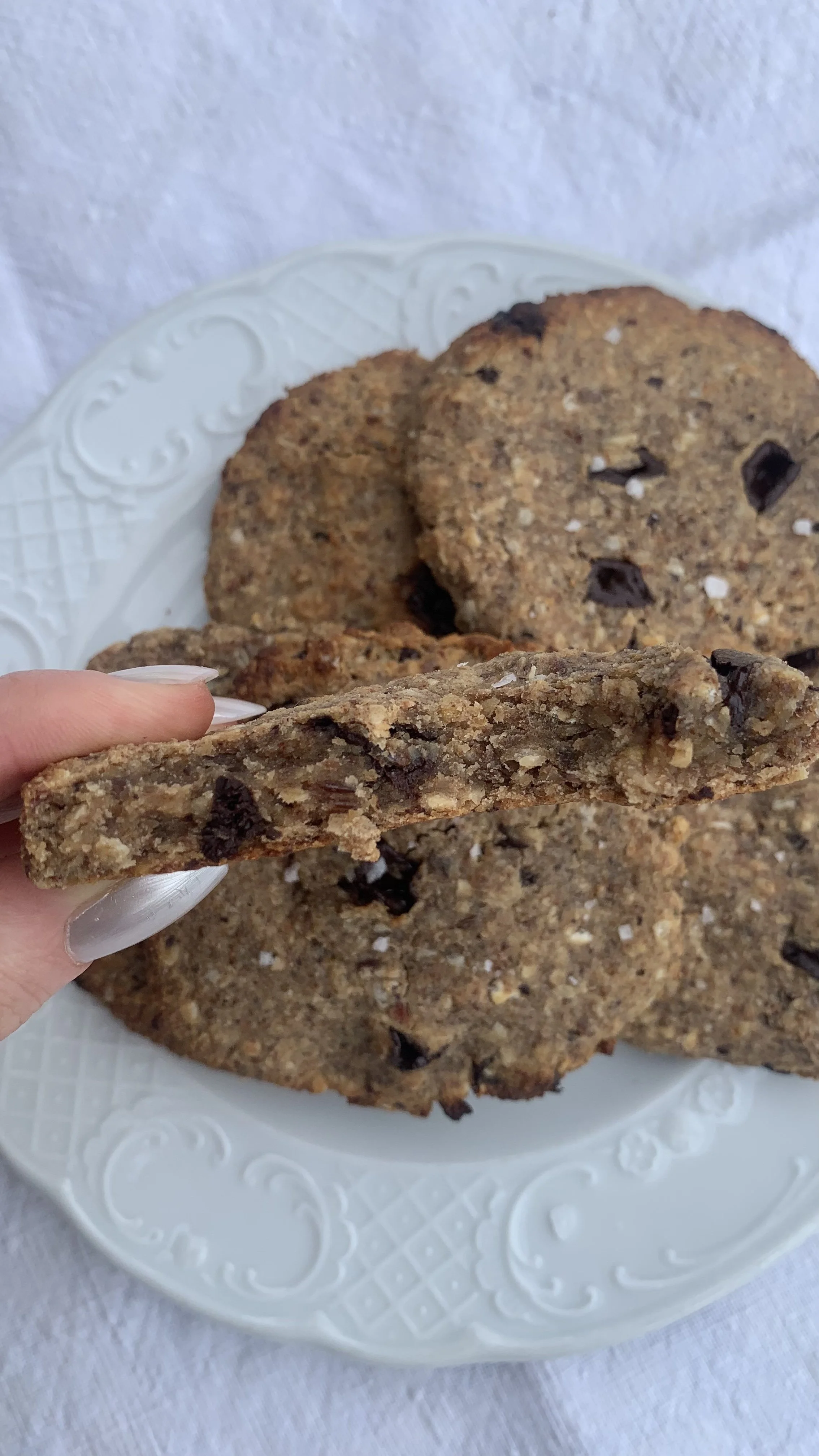
These cookies came from a cookie craving that needed to be fixed with just the ingredients we had left in the cupboard and fridge. And turns out, they happened to be the best ingredients to make the kind of cookie that’s crisp on the outside and yet melt in the mouth gooey on the inside.
Plus, you’re getting a bunch of whole foods, 9g protein per cookie, 7g of fibre per cookie and they contain both veggies (beans count as a veg if you didn’t know!) and fruit - and won’t spike your blood sugar.
Eat these warm from the oven for the best texture - the perfect autumnal treat that actually feeds your body and taste buds!
These cookies are…
Blood sugar balancing to stabilise hormones, reduce PMS and lower oxidative stress.
The typical ingredients in standard cookies like sugar and flour are some of the biggest blood sugar spikers, which can pose a problem for us endo peeps.
Blood sugar spiking foods such as high sugar foods and processed foods can potentially contribute to morePMS, menstrual pain and endo pain. Blood sugar spikes increase oxidative stress, which leadsto more inflammation in the body and that may trigger further pain and symptoms. In fact, oxidative stress is higher in people with endo, and it’s a key driver of endo growth.
To avoid these issues, I have focused on the presence of healthy fats (from the nut butter, flax and ground almonds), fibre (beans, nut butter, oats, almonds, flax and dates) and protein (beans, nuts, flax and oats ), which have all been shown to help stabilise blood sugar levels and slow down the uptake of glucose/starch from our food (oats, beans, dates, and the chocolate, in this case) to our blood stream, preventing blood sugar spikes. In fact, just one cookie gives us 9g protein and 7g of fibre!
One of the easiest ways for us to support our blood sugar is to opt for whole food carbohydrates, such as dates, instead of sugar or maple syrup, as I have done here. Whole foods still contain their fibre, which helps slow down digestion and the resulting absorption of glucose to the blood stream, creating a steady drip rather than a flood.
Another great way to support blood sugar is with lower glycemic index foods, and every ingredient in this recipe, even the dark chocolate (because we are opting for a high percentage and low sugar version) is low to moderate on the glycemic index scale. The glycemic index is a tool that looks at foods and the impact they can have on your blood sugar, on a scale of 0-100. A high GI index would be 70 and above, a medium GI is 56-69 and a low GI index is 55 or less. High GI foods are very likely to spike your blood sugar levels and do so quickly, foods with a medium GI rating tend to cause a moderate rise and low GI foods tend to keep blood sugar levels stable and steady over time with a gentle rise. This is because low GI foods break down slowly in the gut because they are rich in fibre and slow release carbohydrates, this means that the release of glucose to the blood stream is slow and gradual.
A quick word about dates: Dates have a low to moderate glycemic index, which means they shouldn’t cause a dramatic or quick rise in blood sugar. However, research has shown that individual blood sugar responses vary from person to person, and if you eat a lot of even a low glycemic index food, it may have a greater impact on your blood sugar levels because you’re eating more in one sitting. You can learn about this here. Therefore, I’ve kept the amounts of dates low (each cookie gives you about one date) and have deliberately ensured there is support from fat, fibre and protein, to further reduce the blood sugar impact. This isn’t because I don’t want you to enjoy dates, I just want to ensure I am catering as well as possible - including those who are more sensitive to dates!
I’ve also intentionally used oats, flax, almonds and beans in this recipe to further support blood sugar.
Rolled oats contain beta-glucan, a special type of fibre found in oats that offers a wide range of health benefits, including stabilising blood sugar post-meals, and as a result, makes oat-based foods more effective than wheat based foods (like using regular flour) for blood sugar stability.
Now let’s look at cannellini beans. Research has shown that when compared to other carbohydrates, like white rice, bean based meals result in lower glucose levels. Additionally, legumes have been shown to lower glucose levels in the following meal as well.
Nuts have also been shown to have a positive effect on blood sugar, showing improvement in blood sugar responses when paired with high glycemic/high sugar foods.
Finally, flax is a power house for blood sugar. Flax seeds contain something called viscose fibre. Viscose fibre forms a gel-like texture when added to water, and when combined with liquids and food in the gut. This slows down digestion and also the release of glucose. In fact, research showed that 30g of flaxseed helped reduce the glucose spike with a sugary or starchy meal, whilst 20g flax per day improved overall glucose levels and responses over 12 weeks.
Constant blood sugar swings can take their toll on hormones, leading to issues like elevated androgens (think testosterone), which can affect ovulation and cycle length. Blood sugar swings may also cause oestrogen excess or dominance and low progesterone if ovulation is interrupted or stopped entirely. Both of these imbalances can cause more PMS, heavier periods, and may also exacerbate endometriosis symptoms.
Additionally, this dessert can help us out with luteal phase or period cravings. When we’re in our luteal phase, we often experience more blood sugar swings because oestrogen, which dominates in our follicular phase, helps us to regulate our blood sugar response, but is lower in the luteal phase. As a result, we tend to get cravings for sweet foods or foods high in starch. The problem is, these foods keep us on a blood sugar rollercoaster, and raise inflammation levels, resulting in more of those inflammatory symptoms and pain that we’re trying to avoid. These cookies, being lower in sugar and rich in fibre, can help us get our fix without the pain and PMS triggering spikes.
Finally, blood sugar swings are linked heavily with mood disorders such as depression and anxiety, so if you struggle with low moods in your luteal phase, supporting blood sugar can actually support your mental health.
Now, let’s be clear before we wrap up this section. I am not saying you have to avoid sugar or refined carbs for the rest of your life, but if like me, you enjoy a sweet treat as a snack or after dinner, it can help to make these regular goodies a bit more blood sugar balancing, so that we’re looking after ourselves on a day to day basis.
Gluten and dairy free to help minimise symptoms and reactions in certain endo folk.
Whilst not everyone with endometriosis needs to go dairy free or gluten free or entirely gluten/dairy free (some people feel better just not eating them that often), reducing gluten and/or dairy may help some of us manage our pain and endo belly symptoms.
In a major and recent survey study of 2388 endometriosis patients, out of those who removed or reduced gluten, 45% experienced a reduction in pain. In another study, 75% of patients had a significant reduction in painful symptoms after eliminating gluten for 12 months. There is also a significant association between endometriosis and coeliac disease. And whilst the research on endometriosis and gluten has limitations, I myself experienced improvements by reducing gluten in my diet (in fact, it was one of the key players for helping me live a normal life again no longer ruled by pain and my periods), as have many of my clients (though not all, it’s very individual).
Likewise, the same major study found that 45% of those who reduced dairy also had a reduction in pain.
If you’d like to learn more about why gluten or dairy may impact some of us with endo and how, and what all the research says, I recently did a huge deep dive into all the research on my podcast, here and here.
Rich in polyphenols to help heal the endo belly and reduce systemic inflammation.
The latest data shows that 96% of UK adults are getting less than the recommended 30g fibre a day. That’s not great for our guts, which rely on fibre to thrive, and people with endo need extra gut support already so a lack of fibre isn’t going to help the situation (though you may find you need to tailor your fibre sources if you have IBS or SIBO). Thanks to the addition of dates, almonds and dark chocolate, these bites offer you over 2g of your recommended 30g, per single ice cream!
Additionally, a major study of 10,000 people found that eating 30 or more plant foods a week helps to create a healthier and more diverse microbiome. This recipe offers you around 5 of your 30 already, and with herbs, spices, olive oil, fruits, veggies, beans/legumes, teas and coffee and whole grains all counting, you can easily top up your levels further. For extra guidance on how to reach your 30 a week, check out this article by The Gut Health Doctor or this one by Zoe.
Polyphenols are types of antioxidants found in certain plant foods that not only reduce inflammation levels and improve overall health, but they are also an absolute favourite food for our gut microbiome, which means that can support our good gut bugs to thrive.
Polyphenols can be found in various plant foods, and are in high amounts in dark chocolate, dates, flax, beans, almonds and vanilla bean.
Research is finding a strong correlation between microbiome disturbances and endometriosis development, such as reduced levels and variety of good gut bugs and higher levels of pathogenic (bad, infectious), opportunistic (in high numbers, can cause problems like inflammation) gut bugs, as well as gut bugs linked to elevated oestrogen levels. These microbiome differences have also been associated with higher IL-8 levels, a type of inflammatory cytokine shown to be involved in the development of endometriosis.
Polyphenols are like gut bug boosters - the more we provide to our good gut bugs, the more they grow and outnumber the bad guys. This helps to bring the gut back into harmony, which can improve gut symptoms and intestinal inflammation and whilst we need to do more research, could even help us fight endo.
A good source of hormone and endo supportive vitamins and minerals.
Amongst several other micronutrients, these cookies are a good source of vit E, magnesium, zinc, folate, and iron to name a few.
Vit E
A recent meta-analysis of over 589 participants, concluded that vit E supplementation can reduce period pain, pain with sex, daily pelvic pain and even improve quality of life with endometriosis patients. And a systematic review and meta-analysis of eight studies and over 1000 people concluded that vitamin E significantly reduced period pain and could be used as a treatment for dysmennorhea. But it’s not just supplements that help - food helps too! One study found people with endo had a 40% reduced intake of vitamin E, but levels increased after following a high antioxidant diet, and oxidation levels reduced by 20%!
Magnesium
Research has shown magnesium to be an effective treatment in preventing dysmenorrhea (period pain) because it reduces inflammatory prostaglandins that are the drivers of both endo and period pain. One study showed that six months of magnesium treatment reduced prostaglandin F2a by over half! In fact, in recent research, magnesium is being explored as a dietary treatment for endo and a higher intake of magnesium rich foods was associated with a lower risk of endo. Additionally, magnesium helps to regulate our sex hormones, and as result, is a recognised treatment for preventing PMS.
Zinc
Low levels of zinc have been linked to endo, and research has shown it can significantly reduce period pain thanks to its anti-inflammatory benefits. It additionally supports follicle development and ovulation, while deficiency has been linked to infertility.
Folate
Folate is crucial to ovarian function and ovulation, and low folate levels can cause irritability, mood swings and fatigue, and fertility problems.
Iron
Iron deficiency is extremely common in general, but even more so in people with heavy menstrual bleeding and even more so in endo, with a recent major study of over 43,000 endo patients finding that we have a six-fold higher odds of iron deficiency.
Iron plays a major role in preventing fatigue, and yet many of the clients who I work with, come to me with significantly low levels. Supporting healthy iron absorption and intake is a key part of beating endo fatigue and recovering from heavy blood loss and low levels can cause brain fog, extreme tiredness, heart palpitations, dizziness, muscle weakness and depression to name a few.
Healthy iron levels are also essential for ovarian function, which is key to producing healthy amounts of sex hormones and low levels are associated with menstrual irregularities and fertility problems. Additionally, low iron levels are linked to ADHD development and can worsen ADHD symptoms, and ADHD is a condition which many people with endo struggle with.
Whilst heme iron (found in animal products and spirulina) is the easiest form of iron to absorb, we can also top up our iron levels with non-heme iron rich foods, found in plants. Chocolate, dates, and chickpeas are all great sources of non-heme iron, making these blondies surprisingly high in iron. Ideally, pair with a vitamin C food like berries, to aid absorption, as non-heme iron can be difficult for our body to absorb, but vit C has been shown to aid this process.
IMPORTANT NOTES TO HELP YOU TAILOR THIS RECIPE TO YOUR OWN BODY AND NEEDS (AND TASTEBUDS!)
Everything you’ve said about blood sugar and processed foods, does that mean I can never have my favourite treats again?
Absolutely not. I am all for ‘worth it moments’. Enjoy our fav foods, whatever they are, in moments when we really desire them. But I am a health coach, and my goal is to minimise your symptoms and lower things like oxidative stress and inflammation that could contribute them, so I am going to encourage snacking smarter and leaning on healthier treats on a day to day basis, and that’s way these recipes are for. So you can have your cake, and eat it!
Are these cookies low FODMAP?
Yes, each cookie is low FODMAP. If you have tow in a row, you may begin moving into amber serving sizes, so see how you respond - everyone is different.
Is this recipe suitable for SIBO?
Everyone’s triggers vary with SIBO, but this recipe is low FODMAP, so may be better tolerated.
Can I use other beans?
Any white beans should work.
Can I make these nut free?
Yes, use ground sunflower seeds and sunflower seed butter.
Are oats gluten free?
Oats are naturally gluten free, but are often handled in factories that also handle gluten, so if you need to avoid any traces of gluten, you can go for gluten free oats.
Further resources
If you’re struggling with your endo symptoms or gut health, you might find my courses and one to one coaching helpful. You can find out more here. I’ve also got endless podcast episodes on endometriosis and SIBO.
HIDDEN FRUIT AND VEG GF COOKIES
Ingredients:
120g cooked cannellini beans, drained well and patted dry
100g medjool dates (if dry, soak in hot water for 10 mins0
80g almond butter (or sunflower butter)
70g oats
25g ground flaxseed
25g ground almonds
1 tsp vanilla extract
50g 85% or higher dark chocolate, chopped into small chunks
Flaky sea salt, to serve
Makes: about 16 bites
Prep time: 10 mins
chill time: 30 mins
bake time: 12 mins
cool time: 15 mins
Method
Preheat the oven to 175c fan.
If using fresh flax seeds, grind in a spice grinder.
Drain the beans well and then pat dry with a clean tea-towel or kitchen roll (this stops the cookies from being too wet).
Pulse and then blend the dates almond butter, beans and vanilla until smooth.
Add the oats, flax and ground almonds and blend again until a thick dough forms.
Stir through the chocolate chips.
Leave for 10 minutes for the oats and flax to soak up the moisture.
Divide into six balls and shape into cookies.
Leave to firm up in the fridge for 30 mins.
Place on a lined baking tray and bake for 12 minutes until they’re beginning to turn brown and crisp on the outside.
Remove and cool on a cooling rack for 15 minutes.
Enjoy warm with flaky sea salt.
Endo of summer special offer - if you’ve got half way through the year and endo has taken much of that time from you, I’m offering £500 off my 12 session 1:1 coaching or £250 off the six session coaching. Learn more about coaching here.
Looking for tools to help you manage endo and your hormones?
These are some of my favourite brands…
DITTO - DITTO is a clinically studied PMS and PMDD supplement with 10 ingredients that target both the mental and physical challenges that come along with the menstrual cycle, developed by a PhD Nutrition Scientist. You can use the code: ENDOBELLY (all caps) for 20% off any and all orders, now and in the future.
Mira - Mira is an at-home hormone testing device for every day use. Use this link and code 2DJESS20 to get 20% off the device and any future wand orders.
Tempdrop- Track fertility effortlessly with Tempdrop’s Wearable Sensor. Get 15% off with code: ENDOLIFE
Need more help or want to learn how to work with me?
Ways to work with me:
One to one coaching info and application
Live and Thrive with Endo 2.0 DIY online course
Endo Sessions: Single and mini-package one to one endo coaching
SIBO Sessions: Single and mini-package one to one SIBO coaching
Masterclasses in endo nutrition, surgery prep and recovery and pain relief
This EndoLife, It Starts with Breakfast digital cookbook
Free resources:
This podcast!